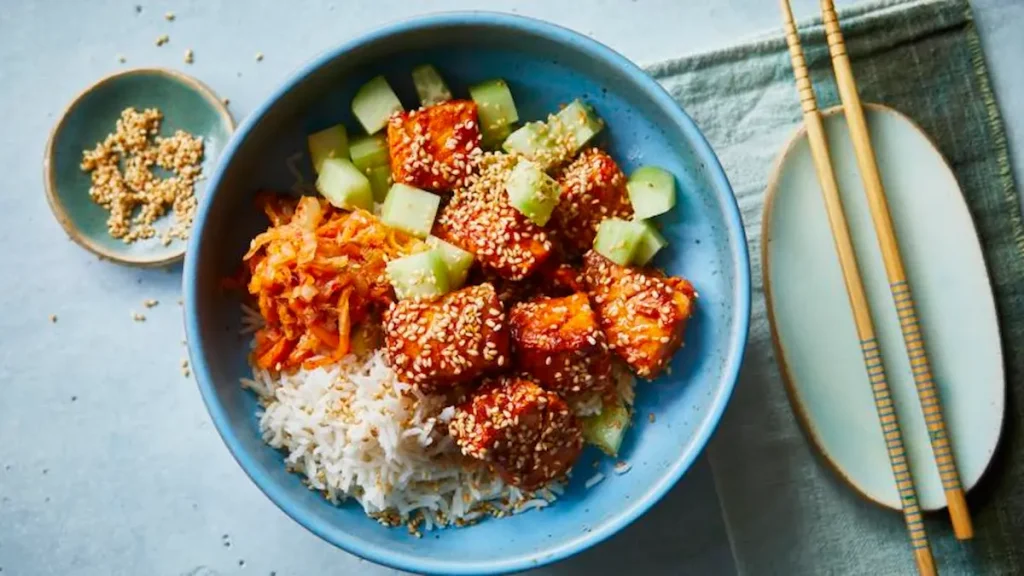
The weeknight cooking problem is rarely cooking. It is decision-making at 6:30 p.m. with an empty fridge, a hungry household, and a delivery app glowing on the counter. Recipes help less than people think — nobody browses a cookbook in that moment. What works is a formula: a small set of templates you can execute half-asleep, built from ingredients that keep. Healthy weeknight dinners are not a cuisine; they are a system. Stock the components, memorise five templates, and rotate the flavours. Dinner becomes a decision you made once, on a calm Sunday, instead of a negotiation you lose every evening.
The Formula: Protein + Vegetable + Base + Sauce
Nearly every fast, balanced dinner on earth fits one frame: a protein (eggs, beans, lentils, tinned fish, chicken thighs, tofu, yoghurt), a vegetable or two (fresh, or frozen without apology), a base (rice, pasta, couscous, bread, potatoes, noodles), and a sauce or flavour base that makes the combination taste intentional — garlic and chilli oil, curry paste, soy and ginger, lemon and herbs, a jar of good tomato sauce, a spoon of peanut butter thinned with hot water. Keep two options from each column in the house and you can produce a genuinely different dinner every night of the week without a plan. The cooking skills involved are minimal: most templates are one pan or one pot, and the order is almost always the same — start the base, cook the protein, add the vegetable, sauce at the end.
Five Templates Worth Memorising
The tray bake. Chicken thighs or chickpeas, chopped root vegetables and onions, oil and one spice blend, all on one tray at high heat for 25 minutes while rice or couscous cooks itself. Washing up: one tray.
The 15-minute noodle soup. Stock, noodles, frozen peas and sweetcorn, an egg whisked in or tofu cubes, soy, ginger, chilli. Tastes like you tried; takes less time than delivery.
The bean chilli. Onion, garlic, two tins of beans, tinned tomatoes, cumin and smoked paprika, served on rice or a baked potato with yoghurt. Doubles beautifully for tomorrow’s lunch.
The fridge-clearing stir-fry. Whatever vegetables exist, a protein, garlic and soy over rice. This template exists to convert Sunday’s leftovers into Thursday’s dinner and is the main reason a stocked freezer matters.
The breakfast dinner. Eggs any style, beans on toast, grilled tomatoes and mushrooms. Nutritionally complete, universally accepted, ready in twelve minutes. No household in history has regretted it.
Each template adapts to what you have — that is the entire point. Our nutrition guides make the same argument from the shopping side: a stocked store cupboard of staples is what makes the healthy choice the fast choice.
The Ten-Minute Head Start
Two small habits separate households that cook on weeknights from households that intend to. First, a Sunday stock-up of the formula ingredients — nothing elaborate, just the guarantee that the components exist. Second, a five-minute evening habit: while tonight’s dinner cooks, decide tomorrow’s and move anything frozen into the fridge. That tiny transfer of decision-making, from exhausted-evening-you to calm-evening-you, is worth more than any recipe collection. Add a running list on the fridge for staples as they run out, and the system maintains itself.
The Twenty-Minute Weekend Prep That Powers the Week
The templates above get faster with one small investment: twenty minutes at the weekend that converts raw ingredients into ready components. Cook a big pot of one grain — rice, couscous’s shelf-stable cousin bulgur, or pasta — and refrigerate it in portions. Wash and chop the sturdy vegetables (carrots, peppers, onions, cabbage) into a container so stir-fries and tray bakes start at the cooking stage, not the chopping stage. Make one sauce or dressing in a jar — a lemon-herb oil, a peanut-lime mix, a garlicky yoghurt — because a good sauce is what turns the same chicken, beans, or eggs into three different dinners instead of one dinner three times. Boil a handful of eggs. Move two portions of anything frozen down to the fridge across the week. None of this is the elaborate, colour-coded meal-prep of social media; it is simply ingredients made convenient, sized for a normal kitchen and a normal level of enthusiasm. Households that prep components rather than finished meals waste less, get bored less, and still cook each dinner fresh — the difference the chopping already being done makes at 6:30 p.m. is wildly disproportionate to the twenty minutes it cost on Sunday.
A note on the information side of eating well: the internet is full of confident nutrition nonsense and miracle claims, and the same scepticism you’d apply to any too-good-to-be-true online offer — the subject of our recent safety coverage — applies to diets promising transformation in a week. Real weeknight cooking is slower, plainer, and works.
None of this requires loving cooking. It requires removing friction until cooking is easier than the alternative — and with these templates, at twelve to thirty minutes including the decision, it honestly is. Healthy weeknight dinners are not about virtue. They are about engineering your kitchen so that the fastest option on a tired Tuesday also happens to be a good one.
Keep a small “greatest hits” list as you go. After a month of the templates, your household will have silently voted: two or three dinners will be requested again, one will be tolerated, one will be quietly never mentioned. Write the winners on the inside of a cupboard door with their ingredient lists. That list — personal, tested, and proven at your own table — is the true end product of this system, worth more than any cookbook, because it was built by the only critic whose opinion matters at 6:30 p.m. on a Tuesday: your own past dinners.
And if a template truly fails on a given night — the rice is stale, the eggs are gone, the day has won — let the fallback be a simpler version of the same idea rather than the delivery app: beans on toast, an omelette, soup from the freezer. A system survives its bad nights by having a floor, and the floor of this one is still cheaper, faster, and better for you than ordering in.